Nail Fungus · Review
Kerassentials Review: Does It Work?
By Evan Mercer · Updated July 2026
Advertising disclosure: This article contains affiliate links. If you buy through them we may earn a commission at no extra cost to you. Full disclosure.
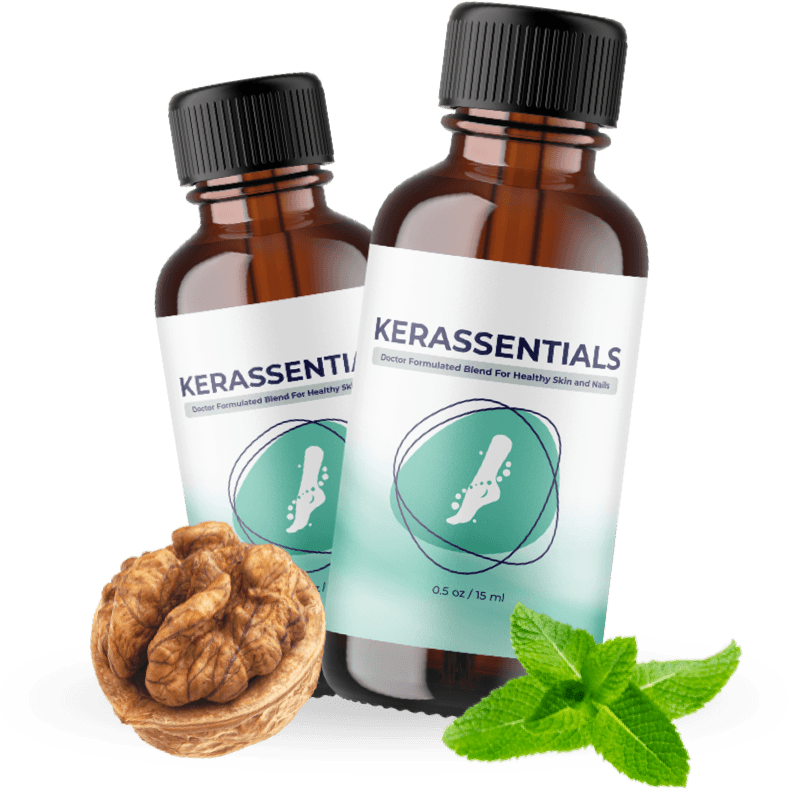
Can a brush-on oil actually clear a nail fungus infection? For an established case, the plain answer is: probably not on its own. Kerassentials is one of the most heavily advertised oils in this space, and its essential-oil actives do have real antifungal activity in the lab, but reaching fungus buried under a thick nail plate is a different challenge entirely. Below we separate what this oil can realistically do from what the funnel implies it does, weigh its 60-day guarantee against a refund rate most reviews skip, and land on where it fits.
Kerassentials
Topical essential-oil blend for nail and skin health, backed by a 60-day money-back guarantee.
Kerassentials at a glance
- Verdict: A reasonable nail-care oil for mild, early or purely cosmetic nail concerns, but not a proven cure for an established fungal infection.
- Our rating: 4.1 / 5
- Best for: People with mild or cosmetic nail concerns who want a natural topical oil and value a solid money-back guarantee.
- Price: From $69 per bottle (cheaper per bottle on multi-bottle orders).
- Yellow flag: A relatively high refund rate, covered in full below.
The short answer on whether a topical oil clears nail fungus
Start with the mechanism, because it decides everything else. Nail fungus lives in and under the nail plate, a dense layer of keratin that most topical products struggle to penetrate. This is exactly why even prescription topical antifungals, which are pharmaceutically formulated to soak in, post modest cure rates, and why doctors often reach for oral antifungals on stubborn infections. A cosmetic oil faces the same wall, plus it has not been tested as a drug against onychomycosis at all.
So Kerassentials is best understood as two things at once. As a nail and skin conditioner it is perfectly plausible. As a fungus cure for an entrenched infection, the evidence is thin, and treating it as a guaranteed fix is where most disappointed buyers go wrong. Hold that split in mind for the rest of this review, because it explains both the honest use case and the refund number further down.
What is Kerassentials?
Kerassentials is a topical oil sold through ClickBank and applied directly to the nails and the surrounding skin, usually a couple of times a day with a brush or dropper. It is marketed for nail and skin health, with the pitch built around fighting fungus and supporting clearer, healthier-looking nails. There are no pills to swallow; the entire routine is external.
Legally and practically it is a supplement-style skincare product, not an antifungal medication. Prescription and over-the-counter antifungals are tested specifically against onychomycosis, the clinical name for nail fungus. Kerassentials has not been through that testing. What a blend like this genuinely does is condition the nail and cuticle, calm the surrounding skin, and deliver oils that show antifungal activity in a dish. That is a real effect, just a limited one, and it is not the same as a proven cure.
Set expectations before you buy
Nail fungus is stubborn. Even prescription oral antifungals clear the infection in only about half to two-thirds of cases, and topical treatments clear far fewer. No brush-on oil, Kerassentials included, should be expected to beat those odds. Treat it as a nail-care oil that may help mild cases and appearance, not as a guaranteed cure.
Kerassentials ingredients
Kerassentials is built around a blend of essential oils and skin nutrients. The components it is marketed around break down like this:
| Ingredient | What it does | Evidence |
|---|---|---|
| Tea tree oil | Classic antifungal and antiseptic essential oil | Antifungal activity in lab studies; limited clinical data on nails |
| Clove bud oil | Contains eugenol, an antifungal and antimicrobial compound | Antifungal in the lab; little human nail-fungus data |
| Lavender oil | Soothing, mild antimicrobial and antifungal properties | Weak but supportive lab evidence |
| Flaxseed & almond oils | Carrier oils that moisturize and aid delivery | Good for skin conditioning, not antifungal |
| Vitamin E | Antioxidant that supports skin and nail health | Supportive for skin, not a fungus treatment |
The two actives worth caring about are tea tree oil and clove bud oil. Both show genuine antifungal activity against fungal strains in the lab, which is where the marketing draws its ammunition. But there is a gap between killing fungus in a petri dish and clearing it from inside a living nail. A dish has no keratin barrier; your toenail is almost entirely barrier. Lab activity is a promising starting point, not proof the oil reaches and clears the infection.
The disclosure gap
Our main ingredient concern is transparency. The published material does not spell out the concentration of each essential oil, and antifungal effect depends heavily on how much active is present and how well it penetrates. Without those numbers, you cannot tell whether the tea tree and clove sit at a meaningful strength or closer to a light scenting. The ingredient list alone does not settle it.
Does Kerassentials work? What realistic results look like
For a specific kind of user, someone with mild, early or purely cosmetic nail concerns who applies it consistently, Kerassentials can plausibly deliver:
- Better-looking nails and cuticles, largely from the moisturizing carrier oils and vitamin E.
- Calmer, less irritated skin around the nail.
- A possible edge against very mild surface fungus, courtesy of the tea tree and clove.
What it will not reliably do is cure an established infection. Once fungus is embedded deep in the nail, a topical oil struggles to reach it, and the nail itself has to grow out before you see anything clear. That means patience measured in months: fingernails take roughly four to six months to fully regrow and toenails a year or more. The buyers who expected a fast cure are almost always the ones who walk away unhappy, which points straight at the number in the next section. For what actually clears an infection, see our guide on how to get rid of toenail fungus.
The refund rate, and why it belongs in this review
Here is the figure most reviews leave out. Marketplace research puts Kerassentials at a relatively high refund rate, around 18%, roughly one in five or six buyers asking for their money back. We include it because it is one of the more useful signals a buyer can have before ordering, and because a review that hides it is not being straight with you.
It is worth reading that number in context rather than as a verdict on its own. A refund rate near 18% usually means one of two things: the product underdelivered, or the funnel oversold it. For a condition as slow and uncertain as nail fungus, where even real medication fails a meaningful share of the time, a chunk of refunds is close to expected. It does not brand the product a scam, the ingredients are legitimate, but it does tell you a fair number of people felt the results did not match the pitch.
Weigh this against the guarantee
An 18% refund rate is higher than we like to see, and the clinical evidence that Kerassentials cures established nail fungus is thin. The counterweight is a 60-day money-back guarantee, which caps what you actually stand to lose. Treat the “cure” framing skeptically, buy a single bottle first rather than a six-month stack, and be ready to use the guarantee if it underdelivers for you.
Framed fairly, the refund rate and the guarantee cut in opposite directions. The refund rate is a caution about how often this oil disappoints; the guarantee is why that disappointment does not have to cost you much. Both are true at once, and both belong in an honest picture.
Kerassentials pros and cons
Pros
- Contains tea tree and clove oils, which show real antifungal activity in the lab
- Carrier oils and vitamin E genuinely condition nails and surrounding skin
- Simple topical routine with no pills to swallow
- 60-day money-back guarantee limits your financial risk
- Cheaper per bottle on multi-bottle orders (from $69)
Cons
- Relatively high refund rate around 18%; a notable share of buyers ask for a refund
- Thin clinical evidence that it cures established onychomycosis
- Essential-oil concentrations are not fully disclosed
- Results are slow: nails take months to grow out clear
- Not a substitute for real antifungal treatment on a genuine infection
Is Kerassentials worth it?
It comes down to which situation you are in. If you have a mild, early or cosmetic nail concern and you want a natural oil to condition your nails and maybe nudge back surface fungus, and you treat the 60-day guarantee as your safety net, Kerassentials is a reasonable thing to try. The core ingredients are legitimate and the money-back policy caps your downside.
If you have a moderate or established infection, an oil is unlikely to be enough by itself, and the smarter move is proven antifungal treatment (see the medical note below). Prefer to compare vetted options before committing? Our ranked guide does the legwork, and the Keravita Pro review covers a close competitor if you want to weigh a capsule-based approach against a topical one.
Kerassentials
60-day money-back guarantee, low downside if it isn't for you.
For the full comparison, see our ranked guide to the best nail fungus treatments, read the Keravita Pro review for a close competitor, or head back to the nail-fungus hub.
Talk to your doctor first
This review is general information, not medical advice. If your nail fungus is moderate or severe, spreading, painful, or if you have diabetes or a weakened immune system, see a doctor or dermatologist. Nail infections can turn serious in those cases, and Kerassentials is not a substitute for prescription or over-the-counter antifungal treatment. A clinician can confirm it really is fungus, many nail problems are not, and prescribe treatment that actually clears it.
Frequently Asked Questions
Does Kerassentials actually work for nail fungus?
It may help very mild or early cases and improve nail appearance, mostly through its tea tree, clove and conditioning oils. There is little clinical evidence that it cures an established fungal infection, which typically needs proven antifungal treatment.
Can any topical oil cure an established nail fungus infection?
Rarely on its own. Fungus lives inside and under the nail plate, which most topicals struggle to penetrate. Even prescription topical antifungals post modest cure rates, and doctors often use oral medication for stubborn cases. An oil like Kerassentials is best for mild or cosmetic concerns, not deep infections.
Why does Kerassentials have a relatively high refund rate?
Marketplace research points to a refund rate around 18%. It usually reflects the gap between cure-focused marketing and the slow, uncertain reality of treating nail fungus. The upside is a 60-day money-back guarantee, so your financial risk stays limited.
How long does Kerassentials take to work?
Nails grow slowly, so any visible change takes months. Fingernails need around four to six months to fully grow out and toenails a year or more, so patience is essential regardless of which product you use.
How much does Kerassentials cost?
It starts from around $69 per bottle, with a lower per-bottle price on multi-bottle orders, and it is backed by a 60-day money-back guarantee. Buy direct rather than through third-party resellers to keep the guarantee.