Oral Probiotics · Review
Lumina Oral Probiotic Review (+ Alternative)
By Evan Mercer · Updated July 2026
Advertising disclosure: This article contains affiliate links. If you buy through them we may earn a commission at no extra cost to you. Full disclosure.
Most oral probiotics ask you to take a lozenge every day for the rest of your life. Lumina makes a stranger promise: swab it into your mouth one time, let a lab engineered bacterium move in, and it quietly crowds out the bug that causes cavities for years. As biology it is genuinely clever. As a product to actually buy it is experimental, expensive and sold in a regulatory gray zone, which is why this review scores it as promising rather than proven. Below is what Lumina really is, how the engineering works, the open safety questions, and the simpler option most people should reach for instead.
Lumina at a glance
- Verdict: A genuinely novel one time “replacement therapy” that is fascinating but still unproven, better understood than bought for now.
- Our rating: 3.7 / 5 (promising but experimental)
- Best for: Early adopter biohackers who are comfortable with an engineered organism and thin long term data.
- Price: Historically ~$250 to $500 or more for a single application, sold direct.
- Caveat: Not a daily supplement, not FDA approved as a drug, and hard to reverse once it colonizes.
What is Lumina?
Lumina comes from a company called Lantern Bioworks, and it works nothing like the daily capsules and lozenges in our best oral probiotics guide. Rather than feeding your mouth a friendly strain every day, Lumina is a one time application of a genetically modified strain of Streptococcus mutans called BCS3-L1.
The idea rests on one clean observation. S. mutans is the main bacterium behind tooth decay. When it ferments the sugar in your food it produces lactic acid, and that acid is what dissolves enamel and starts cavities. The engineered BCS3-L1 strain has been altered so it does not produce that enamel dissolving lactic acid. Seed your mouth with this harmless version once, the theory goes, let it establish, and have it crowd out the acid producing wild strains, potentially for years, without you changing anything else.
That is the pitch, and as science it is elegant. It is a “replacement therapy” concept, not a supplement in the everyday sense of the word.
Where BCS3-L1 comes from
BCS3-L1 traces back to earlier academic work on “replacement therapy” for tooth decay, sometimes called the SMaRT approach, which spent years in and out of clinical development. Lumina took that lineage and brought it to market directly. So the underlying concept has a real research history, even though the consumer product itself is new and lightly studied.
How the engineered anti cavity approach works
Walking through the mechanism plainly:
- Normal S. mutans sticks to your teeth, ferments dietary sugar, and pumps out lactic acid. Repeated acid attacks demineralize enamel and, over time, open up cavities.
- BCS3-L1 is engineered so the lactic acid pathway is switched off. It can still colonize tooth surfaces, but the intent is that it cannot acidify your enamel the same way.
- Because it wants the same real estate on your teeth, the hope is that it competitively excludes the wild acid producing strains, taking their spot rather than living alongside them.
- Apply it once and, if colonization holds, the benefit is meant to persist for a long time with no daily dosing.
For the broader context on how ordinary oral probiotics compete for space in the mouth, our primer on the best probiotic strains for teeth covers the conventional strains, such as S. salivarius, that do a gentler version of the same job.
The whole thing hinges on the words “theory” and “hope.” Whether BCS3-L1 reliably out competes established wild strains in a real human mouth, and stays put, is precisely the part that has not been demonstrated at scale.
Is Lumina safe? The regulatory and safety questions
This is where the honesty matters most, because Lumina is not a benign daily lozenge you can simply stop.
Experimental product, thin long term data
Lumina is an engineered live organism meant to colonize your mouth semi permanently, and there is only limited long term human safety and efficacy data behind it. It has been sold direct to consumer in a regulatory gray area, marketed in a way that sidesteps drug approval rather than going through it. That is a very different risk profile from a supplement with a money back guarantee.
The open questions a careful reader should weigh:
- Colonization is the point, and the problem. The entire value proposition is that it sticks around. That also means if you do not like the result, undoing an established engineered colony is neither simple nor well characterized.
- Long term outcomes are unproven. There is no large body of multi year, independent human data showing it prevents cavities better than ordinary dental care over time.
- Regulatory status is ambiguous. It has not been approved by the FDA as a drug for preventing tooth decay; it has been positioned to avoid that classification. That status can change, but as things stand you are an early adopter, not a patient inside a vetted treatment.
- Novelty cuts both ways. Introducing an engineered strain into your oral microbiome is genuinely new territory, and new means we simply have far less real world safety history than we do for conventional probiotics.
None of this makes Lumina dangerous. It means the honest answer to “is it safe?” is “probably, but we do not yet have the long term evidence to say so with confidence,” and that uncertainty is a fair reason for most people to wait rather than a reason to panic. It is also why a genuinely interesting product still lands at 3.7 here and not higher: the science is legitimate, the evidence behind it is not yet there.
Lumina pros and cons
Pros
- Genuinely novel science with a coherent, elegant anti cavity mechanism
- One time application instead of a daily routine you have to remember
- Targets the root cause (acid producing S. mutans) rather than just symptoms
- Built on a real research lineage (BCS3-L1 and replacement therapy)
- Appealing to early adopters who want to be first on emerging biotech
Cons
- Experimental, with limited long term human safety and efficacy data
- Expensive: historically around $250 to $500 or more for a single application
- Sold in a regulatory gray area; not FDA approved as a cavity prevention drug
- Colonization is hard to reverse if you change your mind
- An engineered live organism in your microbiome is genuinely new territory
A simpler, lower risk alternative: DentaBiome
Here is the practical bottom line. Lumina is worth understanding, and if you are a comfortable early adopter with money to spare it may be an interesting bet. But for most readers the sensible choice is a conventional, well understood oral probiotic that you take daily, can stop any time, and that comes with a guarantee.
That is why we point most people toward DentaBiome instead. It uses ordinary, extensively studied beneficial strains, it is reversible (stop taking it and the effect simply fades), it is far cheaper, and it is backed by a 60 day money back guarantee so your downside is capped. You give up the “one and done, colonize for years” ambition, but you trade that for a product whose risks are known and whose commitment is low.
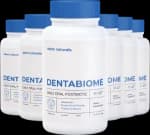
DentaBiome
Our simpler, lower-risk pick
To be clear, this is not us waving away Lumina's science. It is us matching the product to the person: an experimental engineered colony is a big commitment, while a daily probiotic is a low stakes trial. For the full write up, read our DentaBiome review, or compare every vetted option side by side in our best oral probiotics guide.
Is Lumina worth it?
It comes down to your appetite for risk and novelty. If you love being early on emerging biotech, you accept that it is unproven, and neither the price nor the semi permanent colonization faze you, Lumina is a genuinely interesting experiment to be part of.
If you want something safer, cheaper and reversible, and you would rather let the long term data mature before you introduce an engineered organism into your mouth, a conventional oral probiotic like DentaBiome is the smarter pick for now. Either way, remember that neither one replaces the basics: brushing, flossing, fluoride and regular dental visits still do the heavy lifting.
This isn't a replacement for dental care
This review is general information, not medical or dental advice. No probiotic, engineered or conventional, replaces proven cavity prevention: brushing with fluoride toothpaste, flossing, limiting sugar and seeing your dentist. Talk to your dentist or doctor before trying any oral probiotic, especially an engineered one, if you are immunocompromised, pregnant or breastfeeding, or managing a dental or medical condition.
Frequently Asked Questions
What is Lumina and how is it different from a normal oral probiotic?
Lumina is a one time application of a genetically modified strain of Streptococcus mutans (BCS3-L1) that does not produce enamel dissolving lactic acid. The goal is to colonize your mouth once and crowd out cavity causing bacteria for years, rather than taking a daily supplement the way a conventional oral probiotic works.
Is Lumina safe and FDA approved?
It is not FDA approved as a drug for preventing tooth decay and has been sold direct to consumer in a regulatory gray area. There is only limited long term human safety and efficacy data, so the honest answer is that it is likely tolerable but not yet proven over the long term. Talk to your dentist before trying it.
How much does Lumina cost?
Historically it has been sold direct for roughly $250 to $500 or more as a single one time application, which is far pricier than a conventional oral probiotic that costs from about $69 for a supply you can stop any time.
Should I choose Lumina or a conventional oral probiotic?
For most people we suggest a conventional, well understood option like DentaBiome: it is cheaper, reversible, extensively studied and backed by a 60 day guarantee. Lumina suits early adopters who are comfortable with an experimental engineered organism and thin long term data.
Sources
Keep exploring: head back to the oral probiotics hub, compare the field in our best oral probiotics guide, read our DentaBiome review, or brush up on the best probiotic strains for teeth.